
Grace Leung
DIGITAL GROWTH CONSULTANT AND EDUCATOR
Grace is a digital growth consultant and AI educator helping professionals apply AI, SEO and modern marketing strategies.


DIGITAL GROWTH CONSULTANT AND EDUCATOR
Grace is a digital growth consultant and AI educator helping professionals apply AI, SEO and modern marketing strategies.

FOUNDER, HEAD OF BUSINESS DEVELOPMENT @ DAILY DOM
Dominick leads business development at NeoPeople after generating over $500 million in business during his time at Meta.

CEO AT FOUNDATION & DISTRIBUTION.AI @ FOUNDATION
Ross Simmonds founded Foundation, helping global SaaS brands strategise, create and distribute content that drives results.

GLOBAL PROJECT MANAGER AT PURSUIT COLLECTION @ VANESSA IULA
A journalist turned brand builder, she helps people grow through strategic branding, partnerships and community.
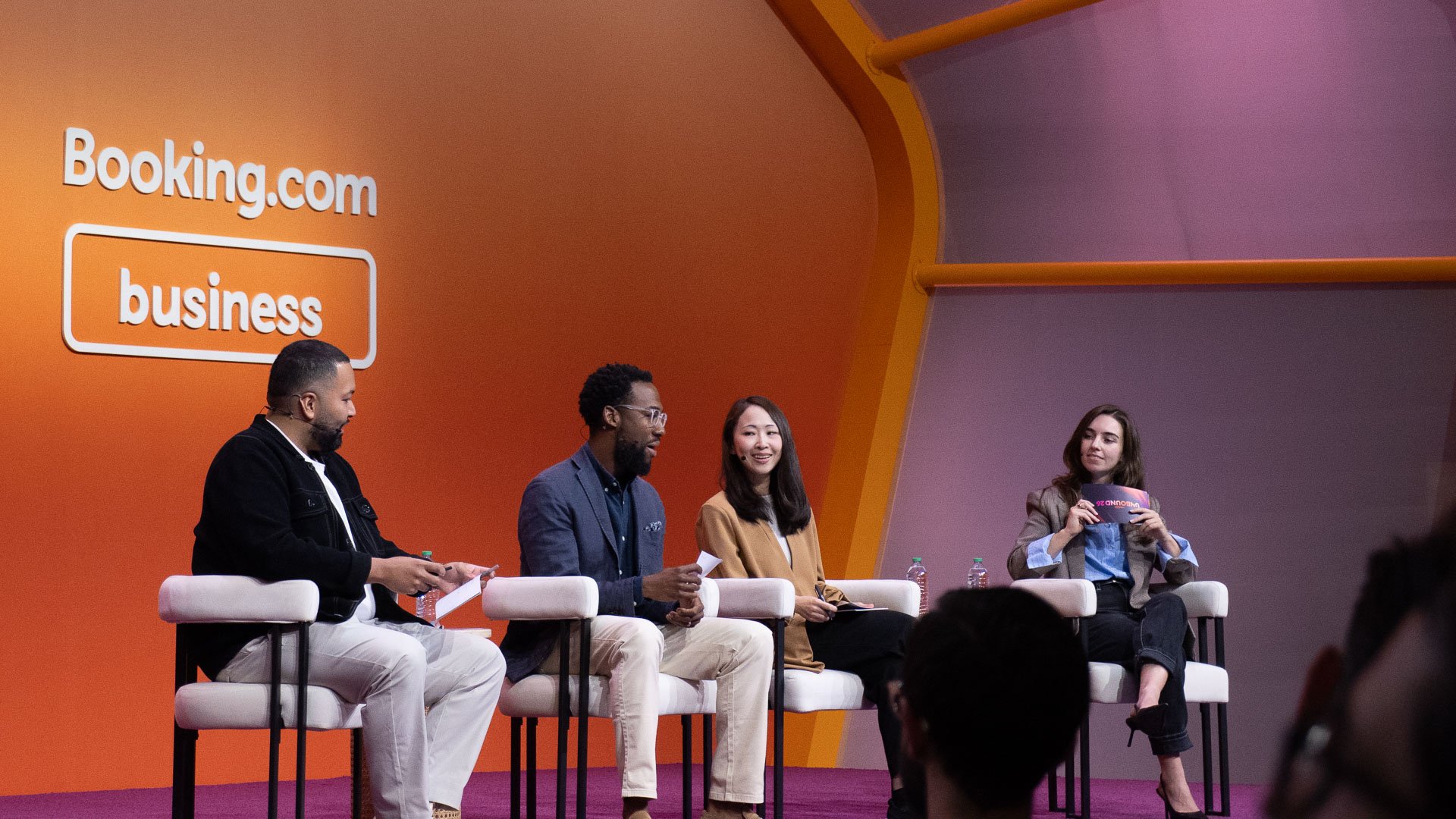 Crace Leung, Dominick Namis, Ross Simmonds and Vanessa IulaGTM Reality Check: What Actually Works
Every go-to-market team now carries the same toolkit. The same models, the same automation, the same infinite content capacity. So the most useful question of 2026 is not what can we do, but what still produces pipeline when everybody can do everything. This session answered that question in the least academic way possible: a game-show format, three practitioners, survey data from B2B buyers and operators, and scores out of five delivered live.
Host Dom put three creators on the clock. Ross Simmonds runs a consultancy focused on the technical foundations of modern search — SEO, AEO and GEO, the acronyms multiplying around AI-era discovery. Grace Leung brought roughly fifteen years of digital marketing and education experience, now pointed squarely at AI-driven systems. Vanessa Iula arrived from the operational side: global project management for performance marketing, HubSpot specialism, a sales background underneath it all.
Round one asked each of them to guess the top survey answer from 100 B2B practitioners and buyers. Round two put one player in the hot seat with a live scenario while the other two judged. What emerged across both rounds was a single, unfashionable thesis: the winners in 2026 are not the teams with the best prompts. They are the teams with proprietary data, owned distribution and positioning a buyer can actually recognise themselves in.
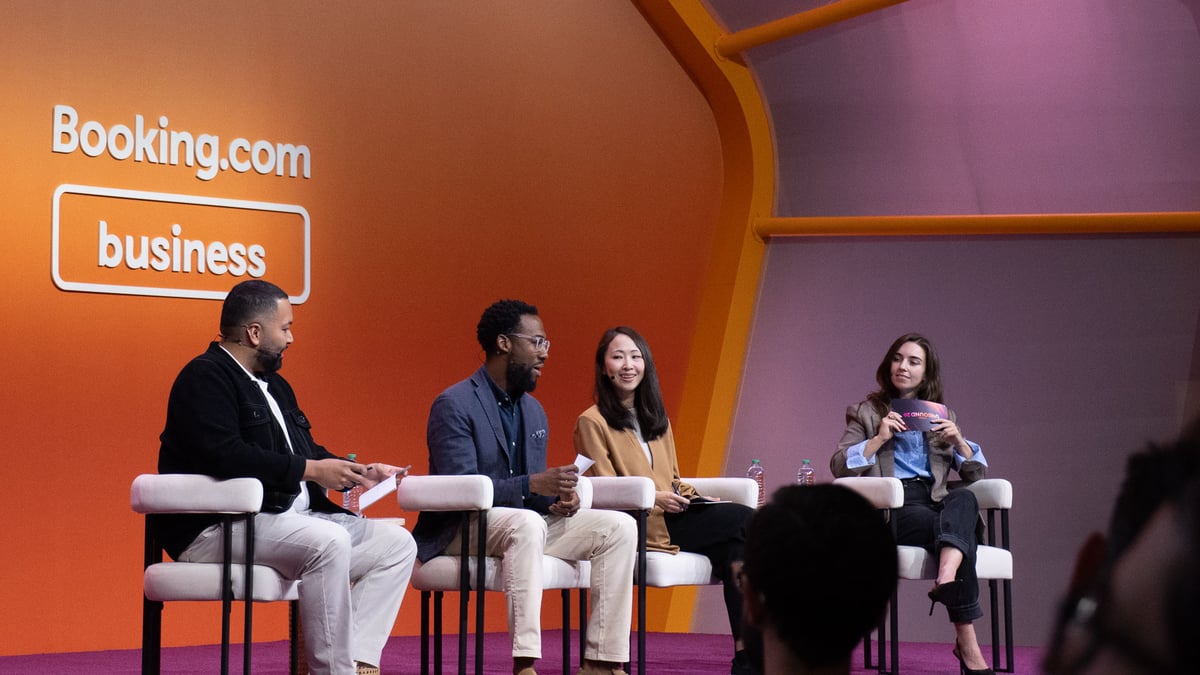
The structure mattered more than it might first appear. Round one was a proximity game: each creator wrote down what they believed had come top of a survey question put to B2B go-to-market practitioners, then defended the guess before the reveal. That forced something panels rarely produce — a public prediction, with reasoning attached, that could be measured against real practitioner behaviour rather than against applause.
Round two inverted the dynamic. One player took the hot seat with a live scenario — a lead qualification model, a buyer-hunt system, a positioning rewrite against a ninety-second clock — while the other two scored the output out of five and explained the mark. One panellist cheerfully cast themselves as the group's Simon Cowell, and the critique was sharper for it.
The effect was a session that tested claims rather than asserting them. When a tactic failed to justify itself, the scoreboard said so.
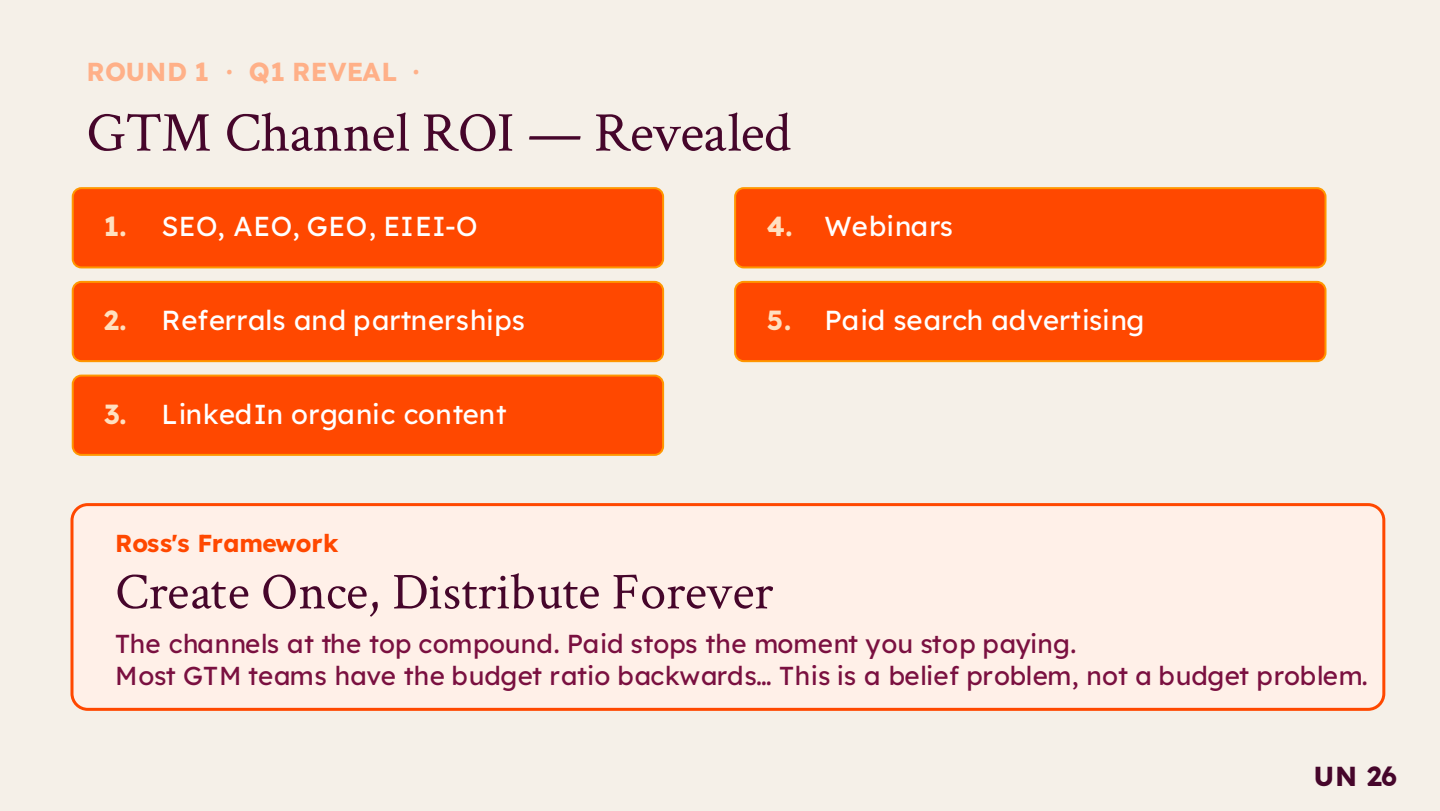
The first question asked 100 B2B practitioners which single channel had delivered the highest pipeline ROI over the previous two months. Ross called it correctly: SEO, AEO and GEO — optimising a site to be found and cited, whatever surface the buyer happens to be using. Grace backed referrals and partnerships, reasoning that referrals are downstream of trust and recognised brands, which is precisely why their return is so high. The third guess was LinkedIn organic content, defended on the grounds that the platform is drifting away from job updates towards genuine community.
Further down the list, webinars landed fourth or fifth — still, in the panel's words, “a beast in B2B” when executed well, with a market gap created by how much mediocre content the category tolerates. Commit to real value, keep the pitch light and late, and the format still converts. Paid search came fifth for the least glamorous reason available: intent. Someone typing “best” or “top” plus a category is already in market, and paying to stand in front of that moment remains efficient.
The more interesting argument was about how discovery itself has changed. The panel described a shift away from ten blue links and the scramble for position one, towards buyers interrogating ChatGPT, Perplexity and similar surfaces directly. The best-performing marketers, they argued, spread brand and story across enough surfaces that they appear in both the AI answer and the search result. Publishing matters because models scrape what is published; one speaker traced their own appearance in AI search results directly back to consistent output.
“We went from a world of 10 blue links where everybody was just striving to get that number one spot to now a world where people are asking questions to ChatGPT and Perplexity.”
There was a concrete payoff attached to the theory. A large AI company approached one panellist about a brand partnership and, when asked how they had found him, pointed to AI and newer discovery surfaces — an outcome he attributed to posting on LinkedIn almost daily for around four years. Done properly, the claim ran, this approach can “unlock a ridiculous amount of pipeline and revenue”.
“A lot of people are honestly sleeping on LinkedIn and the platform's changing so, so much.”
The panel's shared conclusion was that the honest answer is a combination rather than a champion channel. The operating framework offered: create ridiculously valuable content once, then distribute it forever. Sustain that long enough and it becomes the number one channel in your own survey.
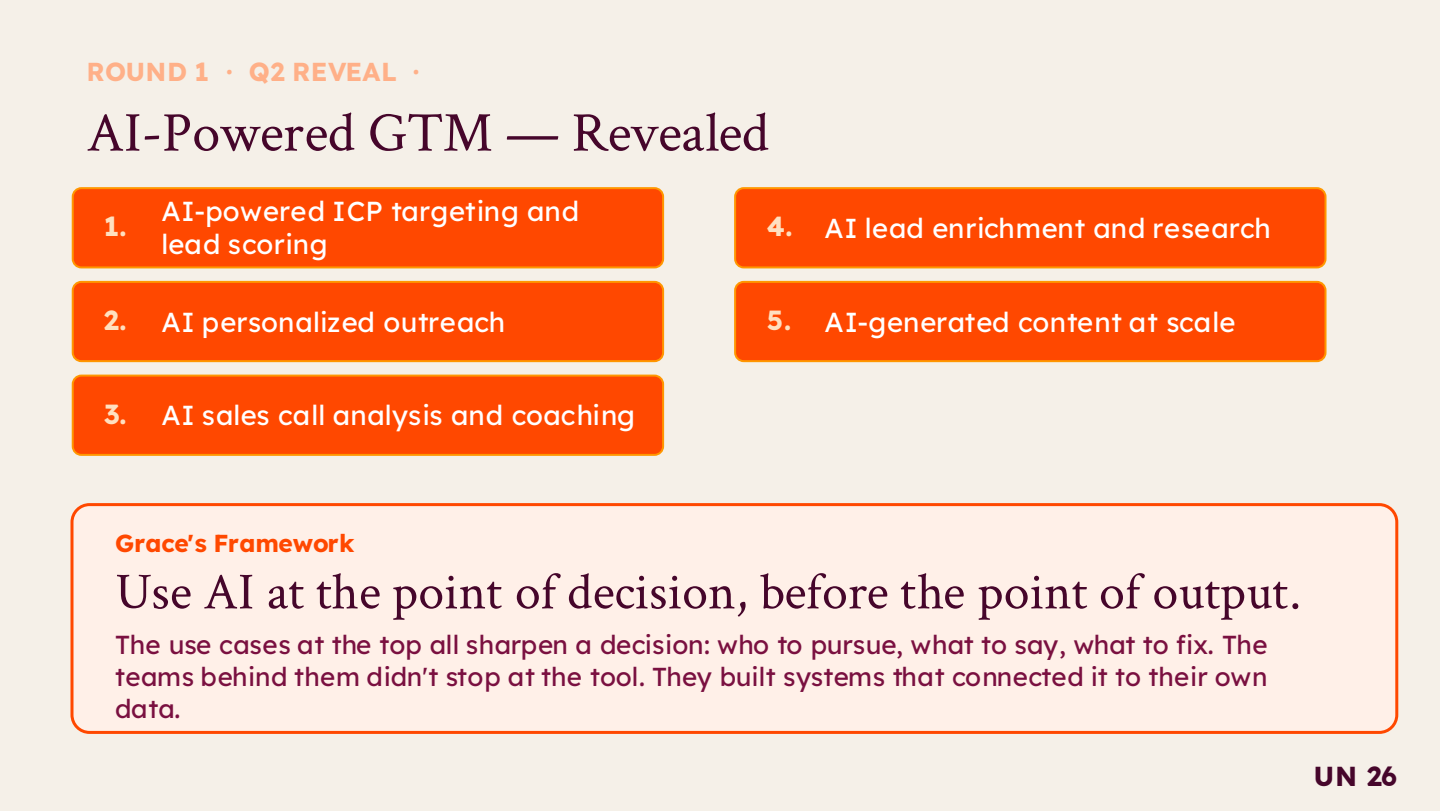
Question two asked which AI-powered go-to-market tactic had produced the most measurable pipeline impact over the previous twelve months. The pre-reveal guesses split neatly along each panellist's instincts: Ross went for AI-personalised outreach, Grace for AI ICP targeting and lead prioritisation, and the third answer was AI lead enrichment.
Grace took it. AI ICP targeting and lead scoring came first, with AI lead enrichment second. Her reasoning was the sharpest diagnostic of the round: AI-generated content ranked around fourth, and it is the use case everybody reaches for first — but more content does not mechanically become more pipeline. The tactics that outranked it all share a trait. Enrichment, personalised outreach and AI call or deal analysis are decision-support tools. They improve who you talk to and what you say, rather than simply increasing volume.
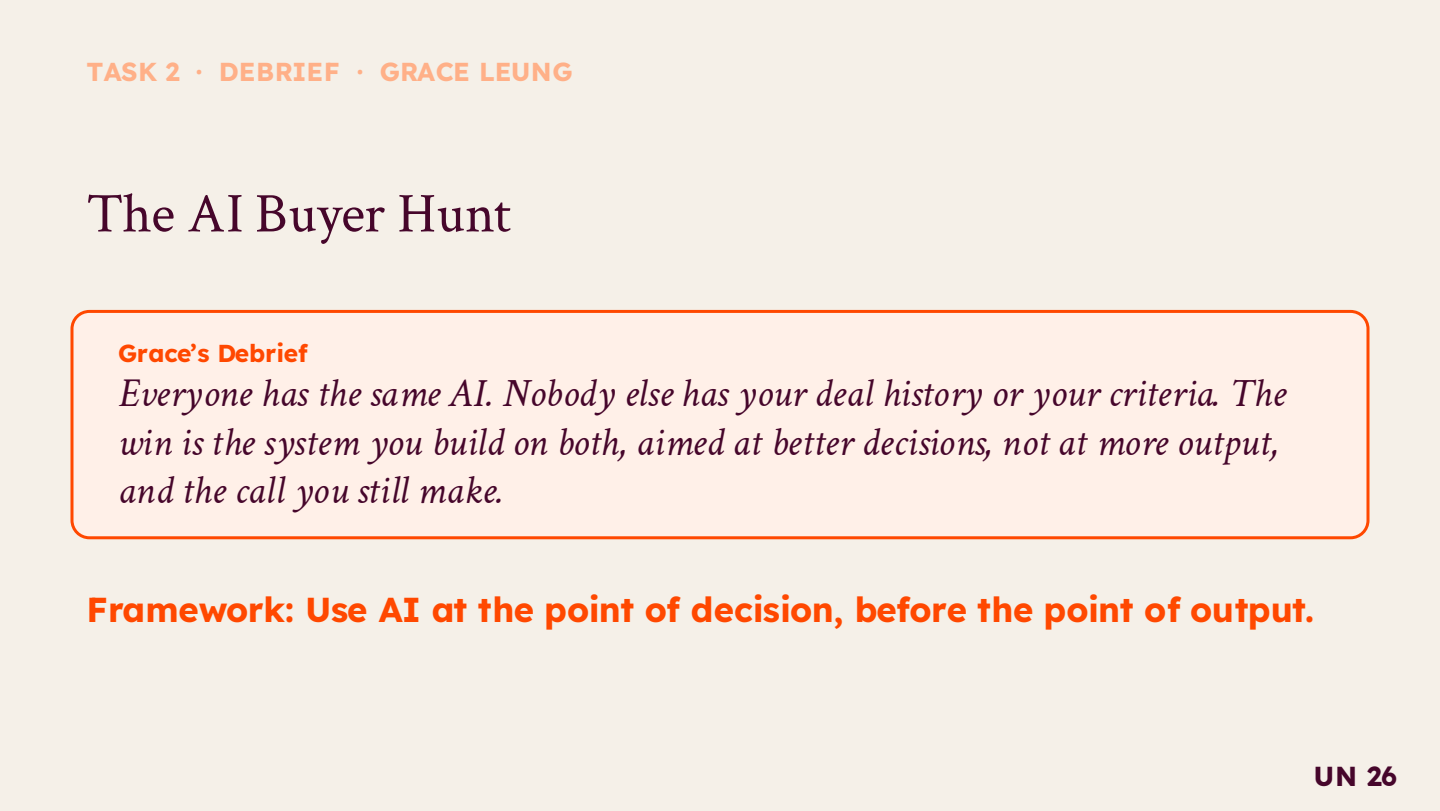
The reframing that followed was the spine of the whole session: use AI to make better decisions, not merely to produce more output. Once generation is free, judgement becomes the scarce input.
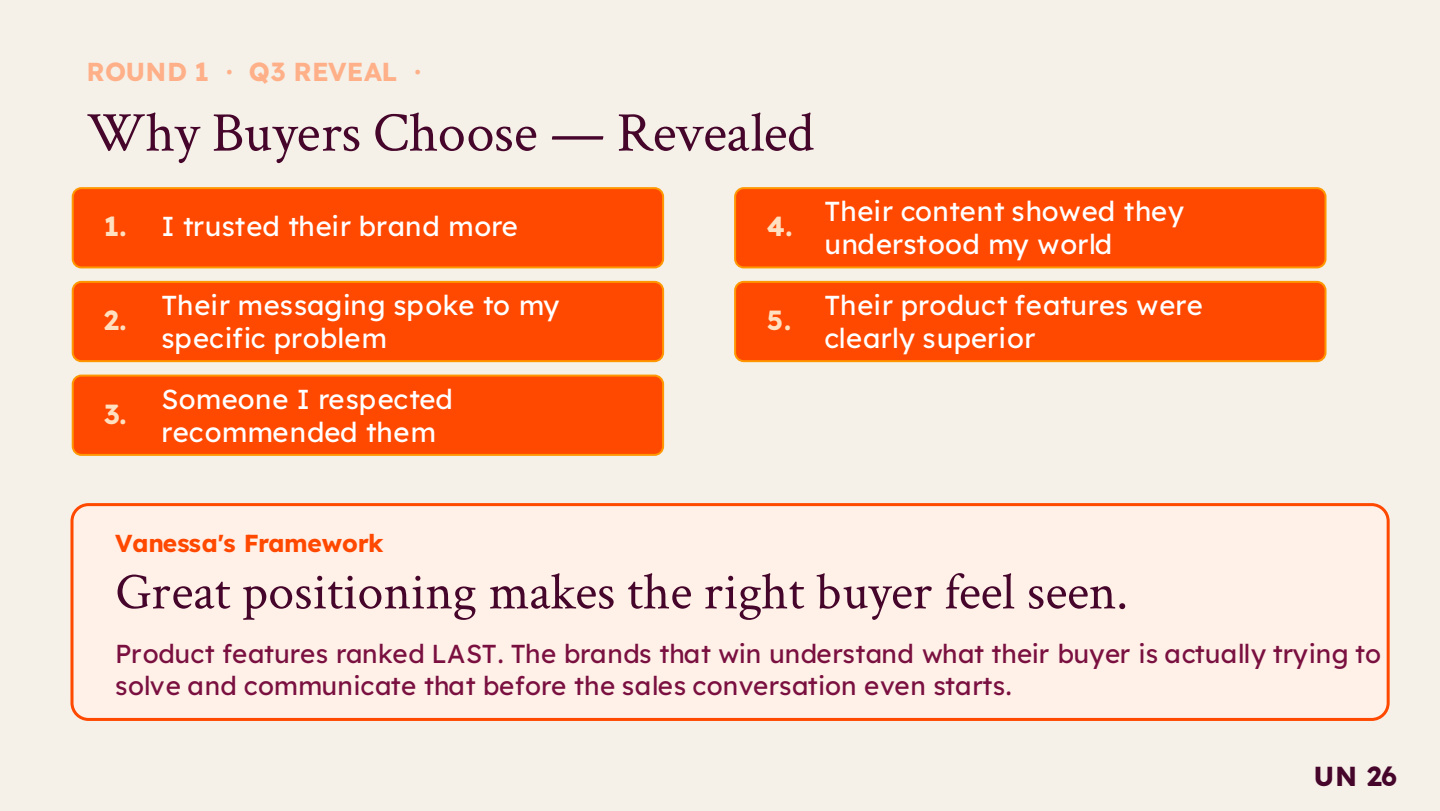
The final survey question turned the lens around. Rather than asking operators what they had invested in, it asked 100 B2B buyers for the primary reason they had chosen one vendor over another. The reveal put trust in the brand at the top of the list — not the feature comparison, not the demo, not the discount.
Placed alongside the two earlier reveals, the pattern becomes hard to miss. Search and referral channels perform because they are trust-delivery mechanisms. AI targeting outperforms AI content because it respects the buyer's attention instead of taxing it. Every result in round one pointed back to the same underlying asset, and the second half of the session was effectively an argument about how you build it.
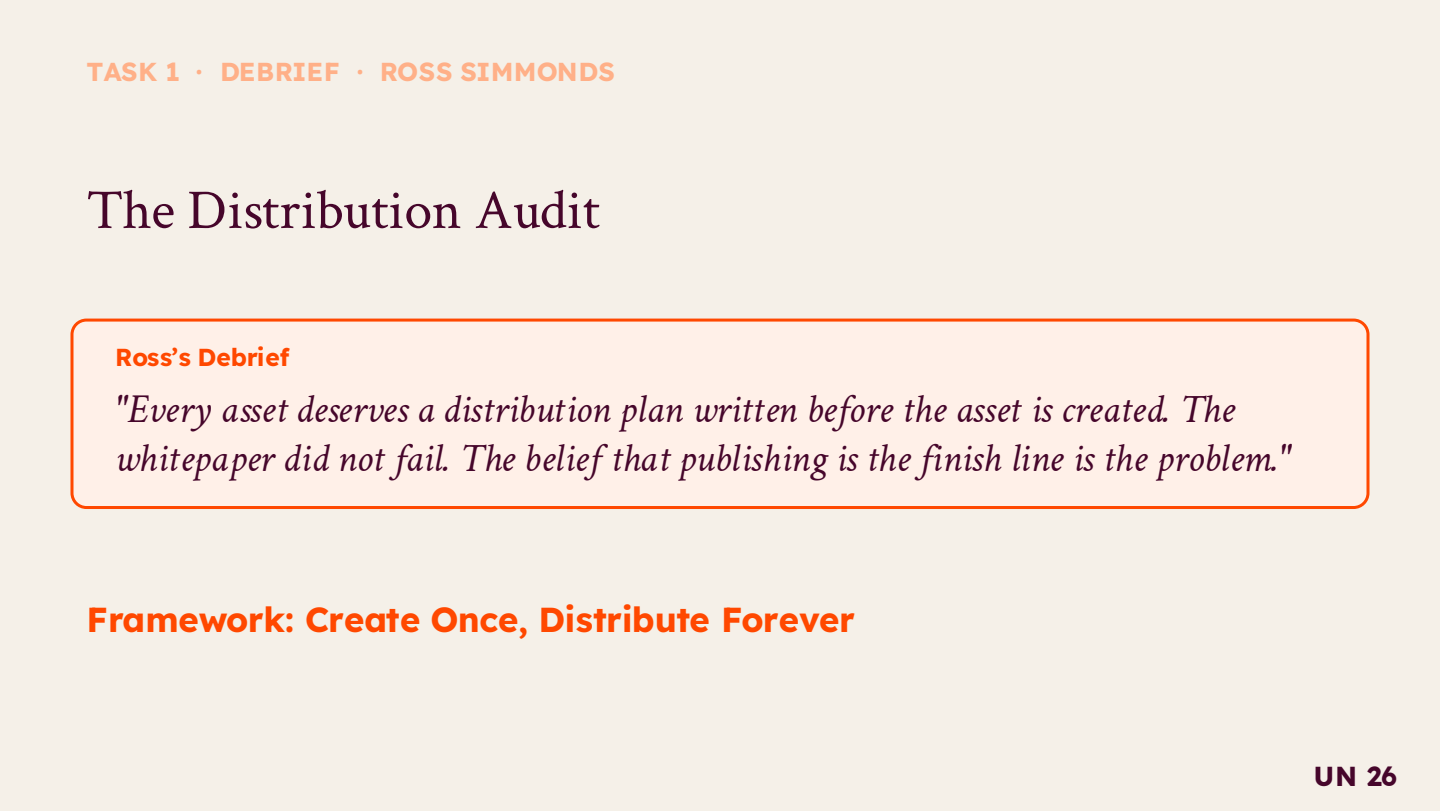
The distribution segment, led by Ross, followed the round-one reveals and set up the round-two exercises. His starting observation is the one most marketing teams have quietly noticed but not yet restructured around: a piece of content that once took four weeks can now be produced in fifteen or twenty minutes. Stories, websites, landing pages, blog posts — all of it is close to instant.
If creation costs collapse for everyone simultaneously, creation stops being a moat. What remains scarce is reach you actually own or have earned: mailing lists, followers, subscribers, organic traffic, partnership placements. The audit discipline he described works backwards from that scarcity. Rather than asking what to make next, ask what already exists and where else it could legitimately live.
It is a deliberately unglamorous practice, and that is much of its appeal in 2026. The compounding comes from repetition across surfaces, not from novelty.
“You can prompt an LLM to create almost anything, but they can't create a distribution channel for you to reach the right people at the right time.”
The lead qualification and ICP exercise produced the only clean sweep of the session: five out of five from all three judges. What earned it was structure rather than sophistication. The framing moved through pattern → fit → pain → timing, with clearly separated buckets that a real team could operate without a data scientist in the room.
Timing drew the most discussion. Useful signals included a company entering a new market, integrating a new system, or attending a competitor's webinar. The judges endorsed the reasoning behind a funding trigger too: a business that has recently raised a Series B is unlikely to have burned through the money within six months, so the outreach window is probably open. The underlying principle is resource realism — prioritise the leads with the best conversion odds, because attention is finite and B2B sales cycles are long.
From there the conversation widened into the panel's clearest consensus on AI. Use it for enrichment, pattern-finding and pressure-testing positioning — not for generating one more email sequence. Everyone has the same models. Nobody else has your history, your business rules, your qualification criteria and your accumulated learnings. Build the system on those proprietary signals and it compounds into what Grace called a GTM learning loop.
One practical technique stood out and is easy to trial this week:
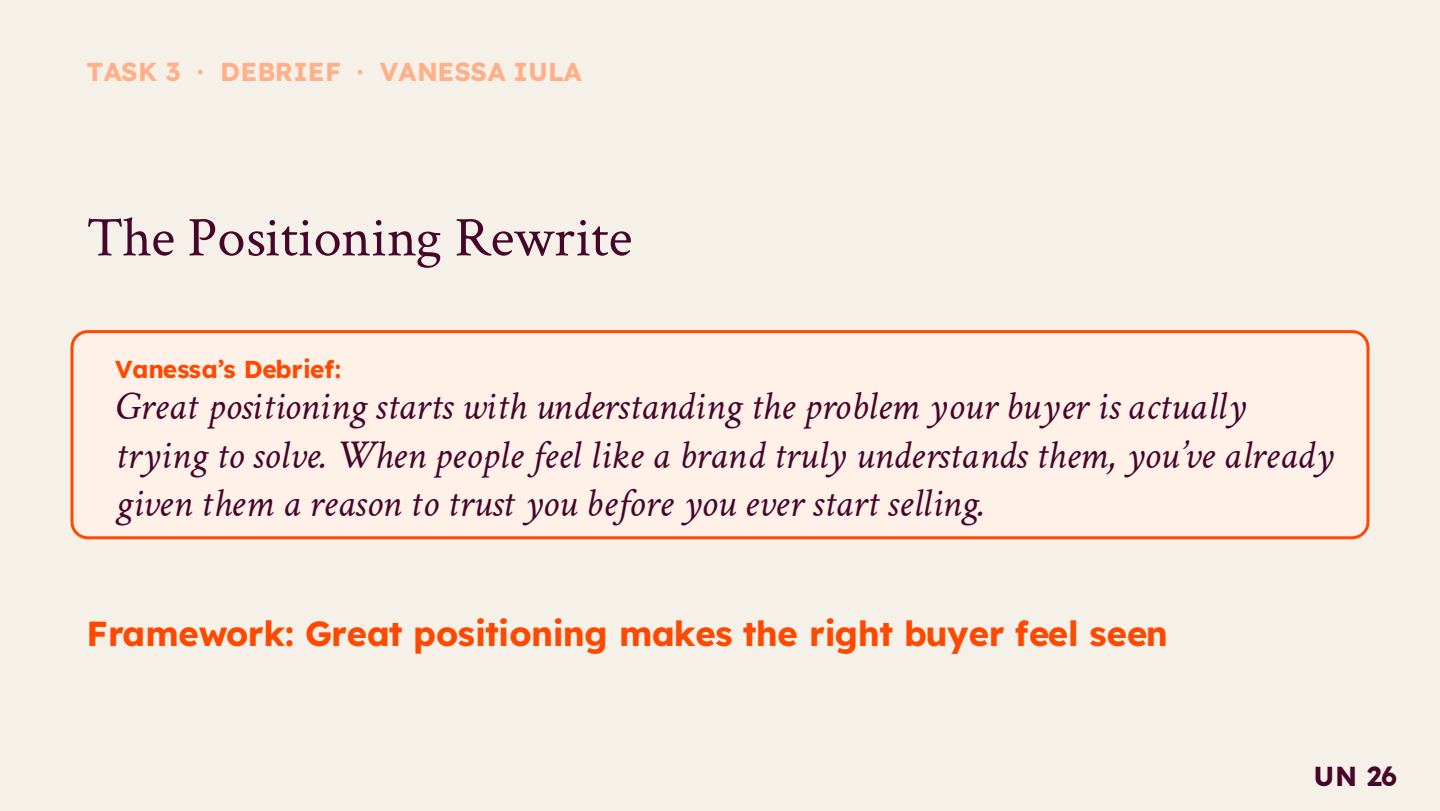
The messaging challenge scored four out of five across the board. The brief: take the baseline line “We help businesses improve their marketing performance through data-driven insights” and rewrite it for a CMO preparing for a Series B — in ninety seconds, out loud.
The rewrite delivered under the clock: “We help growing SaaS companies double down on what's working, remove the resources that aren't, and make smarter marketing decisions as they continue to grow.” The judges' critique of the original was surgical. It says what the company wants to say about itself instead of demonstrating any grasp of the buyer's problem. It states the what without the why or the how. And it leans on buzzwords — “data-driven insights” being the chief offender.
The honest caveat came with it. The task is genuinely hard without knowing the company: HR software, waste management and sales tooling would each demand materially different messaging. Knowing that a buyer is “SaaS” is not knowing anything. Sharpening positioning is trial and error, not a single well-formed prompt.
Make the buyer feel seen. Let them recognise themselves in the message — then build the trust you can act on.
Each panellist closed with a single argument, and the three lines together form a coherent operating model rather than three competing opinions.
Distribution. When anyone can generate a story, a site, a landing page or a blog post instantly, the competitive advantage shifts to reach. Distribution means owned and earned audience — mailing lists, followers, subscribers, organic traffic, partnership engagements. The best B2B brands, the argument ran, spread their stories through user-generated content, creators and video rather than relying on a single owned channel. HubSpot's broadening suite, Breeze included, was cited as evidence of how much surface area is now available to teams willing to use it. The sting in the tail: anyone can build software with AI now, but without distribution there is effectively no product.
Data and decisions. The second closing argument compressed the entire AI discussion into one line, and it deserves to be read twice by any team currently comparing model subscriptions.
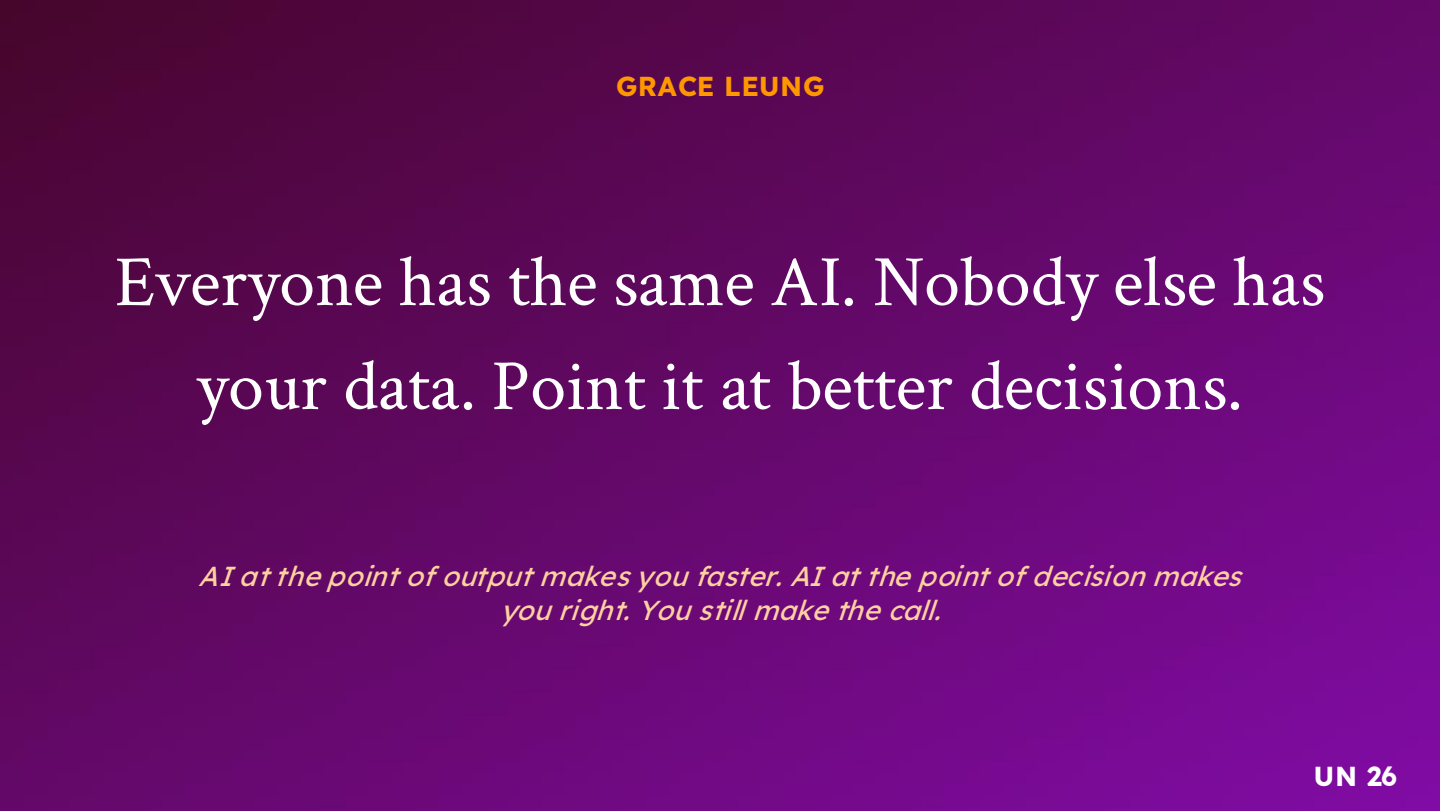
“Everyone has the same AI… but nobody has the data.”
Trust. The third argument closed the loop back to the buyer survey. Positioning that makes a buyer feel understood is not a copywriting flourish; it is the mechanism by which trust is manufactured at scale, and trust was the single reason buyers gave for choosing one vendor over another. Distribution gets the message in front of the right person; proprietary data decides who that person is; positioning decides whether they believe you.
Stripped of the game-show framing, the session offers a short list of things a go-to-market team can begin on Monday. None of them require new tooling; all of them require choosing judgement over volume.
Note on format: this session ran as a scored panel contest and did not include an audience question segment, so no audience questions were detected in the transcript.